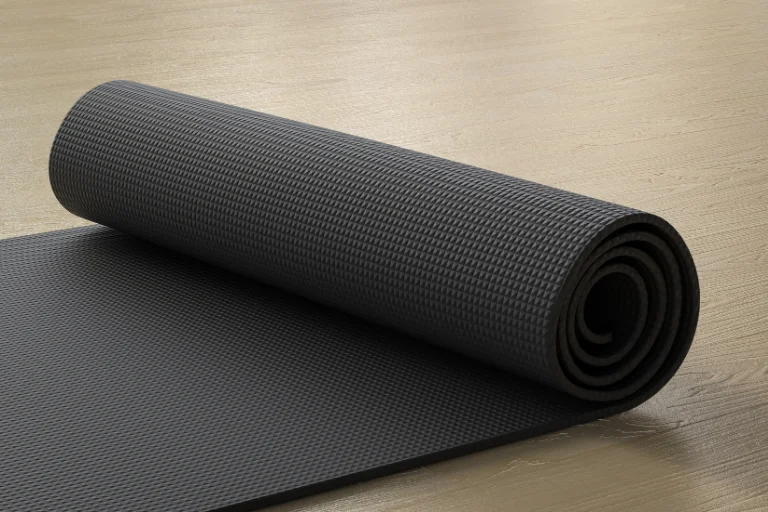
Rubber flooring covers a wider range of needs than most buyers expect when walking in. A home gym in a Dubai high-rise, a kids’ play area in a Sharjah villa, and a warehouse floor in Al Quoz all call for rubber, but not the same rubber. Format, thickness, and texture all shift depending on the load, the traffic, and whether the space is indoors or exposed to the sun.
Rubber Flooring Tiles, Rolls and Mats: Matching the Format to the Space
Interlocking rubber flooring tiles
Suitable for spaces where a clean edge matters and installation needs to be fast without adhesive. Home gyms, apartment balconies, kids’ play areas and small commercial fit-outs are the typical fit, since tiles can be lifted and reconfigured if the room changes use later.
Rubber flooring rolls
Cover large, continuous areas with far fewer seams than tiles, which matters in commercial gyms, warehouses and industrial units across zones like Al Quoz or Jebel Ali. Fewer seams also means fewer points where dirt, moisture, or heavy wheeled equipment can work a floor loose over time.
Rubber flooring mats
These are the loose-lay option for targeted zones rather than whole-room coverage: under free weights, beneath a home gym rack, or as a doorway transition in a rubber flooring garage setup. Mats are the easiest format to reposition or replace individually, which makes them a practical choice under equipment that moves.
Rubber flooring for kids’ play areas carries a different priority again. Slip resistance and impact cushioning matter more than commercial-grade wear resistance here, so thickness and surface texture are usually specified around fall protection rather than heavy load-bearing.
Related reading
Setting up a dedicated fitness space? See our full gym and sports flooring range for higher-spec options built for repeated heavy impact.
Rubber Flooring Thickness, Texture and Maintenance
▲ Quick Answer
How thick is rubber flooring?
Rubber flooring typically ranges from around 8mm for light residential and play area use up to 15mm or more for heavy-duty gym and commercial applications, with thickness chosen based on impact load rather than room size.
Thickness is not a cosmetic choice. It is the main variable that determines how much impact a floor can absorb before the load reaches the subfloor underneath, which matters for both comfort and long-term durability.
| Thickness | Typical Application | Impact Suitability |
|---|---|---|
| 6mm–8mm | Play areas, light residential rooms, balconies | Light foot traffic, low-impact activity |
| 10mm | Home gyms, general fitness rooms | Moderate impact, bodyweight and cardio training |
| 15mm+ | Commercial gyms, free-weight zones, garages | Heavy impact, dropped weights, vehicle traffic |
Rubber flooring texture also affects performance beyond appearance. A hammered or stippled surface improves slip resistance in wet-prone areas, while a smoother granulated finish is more common in gym settings where equipment needs to slide or roll predictably.
How to maintain rubber flooring:
Rubber does not require the sealing or polishing that some hard flooring types do. Regular sweeping or vacuuming to remove grit prevents surface abrasion, and a damp mop with a pH-neutral cleaner handles most spills without breaking down the material.
Rubber Flooring for UAE Conditions: Moisture, Heat and Noise
Rubber performs differently across a Dubai apartment, a Sharjah garage, and an Abu Dhabi rooftop terrace, and each of the following questions matters at the point of specifying, not after installation.
Is waterproof rubber flooring suitable for humid or coastal zones?
Rubber itself is a non-porous, water-resistant material, which is part of why it suits bathroom-adjacent areas, laundry zones and coastal properties where ambient humidity runs high year-round. That resistance sits at the material level. Whether the finished installation is fully sealed against moisture also depends on the seam type and the subfloor preparation, so a supplier should confirm the complete waterproof rating for the specific product and installation method, not just the raw material.
Is rubber flooring mold and moisture-resistant under high humidity?
A properly installed rubber floor over a dry, prepared subfloor resists surface mould growth well, since rubber does not provide the organic material that mould needs to establish itself. The risk shifts to what sits underneath: if a subfloor traps moisture before installation, that moisture can remain sealed under the rubber and create conditions for mould at the substrate level rather than on the rubber itself. This is why subfloor moisture testing before installation matters more in humid climates than the flooring material choice alone.
Does rubber flooring reduce noise in high-rise buildings?
A 6mm rubber tile can reduce impact noise by roughly 15 to 22 decibels, and thicker 10mm rollout rubber can reach a 20 to 28 decibel improvement, according to independent acoustic guidance on rubber flooring performance. For Dubai and Abu Dhabi high-rise apartments where impact noise between floors is a common complaint, this makes rubber one of the more effective flooring choices for home gyms and multi-purpose rooms specifically, though the exact reduction depends on thickness and subfloor construction.
Does rubber flooring develop a strong smell under intense AC usage?
New rubber flooring, particularly recycled rubber, can carry a noticeable odour in the first few days after installation as the material off-gasses. The smell is typically strongest in the first 24 to 72 hours and fades within two to four weeks with adequate ventilation. Recycled rubber flooring sourced and manufactured to proper indoor air quality standards off-gasses considerably less than common materials like carpet or plywood, according to industry reporting on rubber flooring performance. In a UAE villa or apartment where air conditioning runs continuously and windows stay closed, running the AC on a fresh-air setting or opening windows for the first few days after installation clears the odour faster than a fully sealed, recirculating room. Buyers concerned about indoor air quality can also ask suppliers whether a product carries FloorScore certification, the recognised third-party standard for low-VOC flooring emissions.
Outdoor rubber flooring and UV exposure
Rubber used outdoors, on rooftop terraces, balconies or play areas, needs a UV-stabilised formulation to resist the fading and surface hardening that untreated rubber develops under sustained direct sun. Not every rubber product is rated for outdoor use, so confirming UV stabilisation before specifying an outdoor application avoids a floor that degrades within a year or two of installation.
Sourcing Rubber Flooring in Dubai: Pricing and Installation
▲ Quick Answer
What determines rubber flooring price per square metre in Dubai?
Rubber flooring cost depends on thickness, format (tiles, rolls or mats), texture and whether the application is residential or commercial-grade. A garage or play area typically costs less per square metre than a heavy-duty commercial gym specification. SPC Source provides a free site visit and project-specific quote rather than a fixed listed price, since the right thickness and format for your space changes the cost directly.
Rubber flooring pricing in Dubai is not usefully quoted as a single number, because a 6mm play-area tile and a 15mm commercial gym roll are different products solving different problems, not the same floor at different discounts. The factors that actually move the price are:
Thickness: heavier-duty, higher-impact rubber costs more per square metre than lighter residential-grade material.
Format: tiles, rolls and mats carry different material and installation costs, with rolled rubber often more efficient for large continuous areas.
Texture and finish:slip-resistant or decorative surface treatments add to the base cost.
Application type: commercial specifications built for continuous heavy use are priced differently from residential or light-use rooms.
Site condition: subfloor prep needed before installation affects total project cost, separate from the material itself.
The most accurate way to get a real number is a site visit rather than a generic quote, since thickness and format decisions genuinely change the price, not just the finish.
Rubber flooring installation for tiles and mats is typically a dry, click-fit or loose-lay process that does not require demolition of the existing subfloor, which shortens project timelines considerably compared with tile removal and re-screeding. Rolled rubber in larger commercial spaces may use adhesive at seams and perimeters for a fully bonded, gap-free finish.
Rubber flooring over carpet is not recommended as a standard installation method. Carpet is a compressible surface, and laying rigid or semi-rigid rubber directly on top creates an unstable base that shifts and settles unevenly under load, particularly in high-traffic or heavy-equipment areas. The carpet should be removed down to a stable, level subfloor before rubber flooring is installed, which also avoids trapping moisture or debris between the two layers.
GET A QUOTE
Not sure which rubber flooring thickness or format is right for your space?
A home gym, a commercial garage, and a kids’ play area don’t call for the same rubber floor. The right thickness, format and finish depend on the traffic, the load, and the subfloor underneath. Tell us about your space and we’ll recommend what actually fits, before you order anything.
✓ Free site visit ✓ No-obligation quote ✓ WhatsApp or call, your choice